
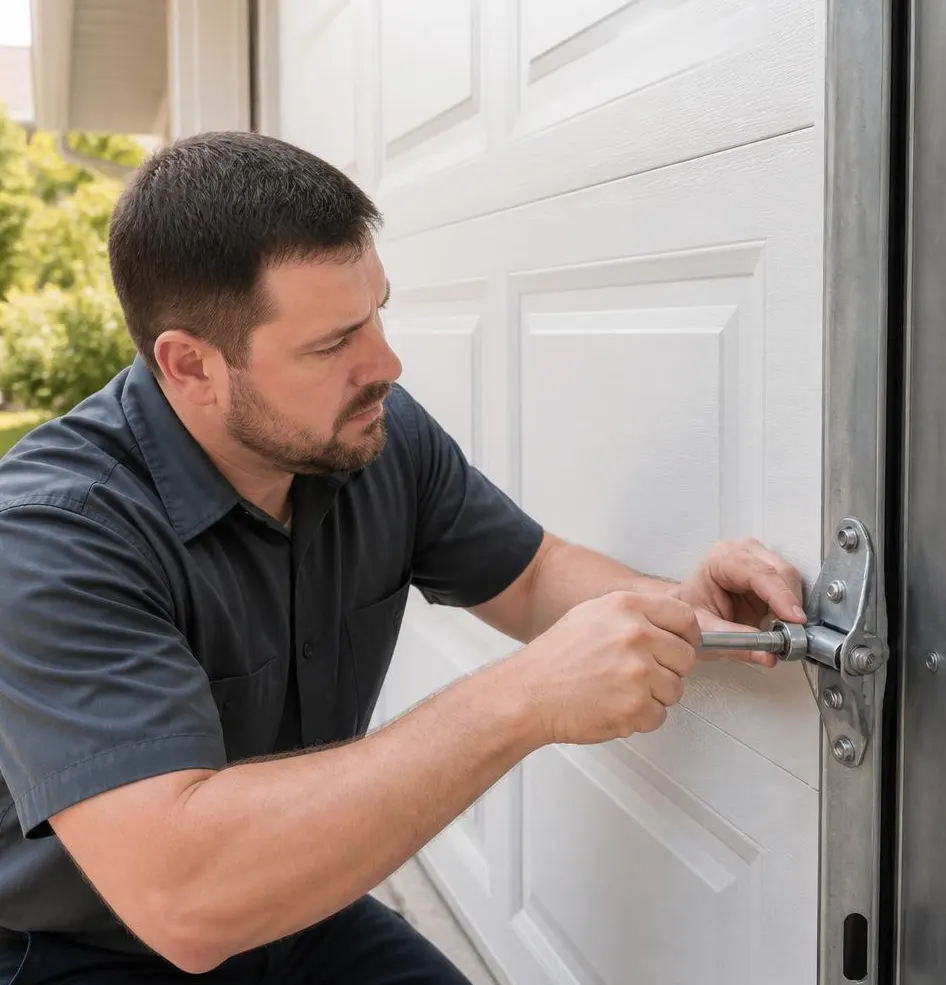
If a garage door opens and closes without catching, most home inspectors call it done and move on to the next item on their list. The exceptions are the obvious ones: a door visibly off its track, a spring with a clear gap in the coils, or an opener that doesn't reverse when something blocks it. Those get flagged because they're hard to miss. Everything subtler — the slow corrosion, the worn-out seal, the opener with no backup power — tends to slide by, and those are exactly the things that turn into repair calls six months after closing.
Before you finalize an offer, or right after you get the keys, spend fifteen minutes in the garage with this list.
Walk the Garage Yourself Before You Sign
1. Spring Type and Wear
Most doors use either a torsion spring mounted horizontally above the door, or two extension springs running along the upper tracks. Look for rust, flat spots, or a visible gap stretched between coils. If it fails: springs near the coast corrode faster from salt air, and a spring that looks original to an older house is likely close to the end of its cycle count. Replacement is a routine job, but it's one you want to budget for rather than discover during a stuck-door morning.
2. Track Alignment and Rust at the Base
Crouch down and sight along each track from the bottom. Check for pitting, flaking rust, or a track that's pulled slightly away from the frame, especially near the floor. If it fails: a corroded or warped track causes the door to bind, run unevenly, or wear out rollers faster than it should, and this shows up earlier in homes exposed to salt air near the water.
3. Panel Condition — Swelling or Delamination
Press your thumb firmly against the bottom panel, particularly on wood or wood-composite doors. A soft or spongy spot means moisture has worked into the core. If it fails: this isn't a cosmetic fix — delaminated panels only get worse, and in a humid climate with regular afternoon downpours, a door that's been sitting with a failed bottom seal is a common way this happens unnoticed.
4. Bottom Seal and Weatherstripping
Look at the rubber strip along the bottom edge and the vinyl seals on the sides. Cracked, flattened, or missing sections are easy to spot. If it fails: this is the entry point for wind-driven rain during storm season, and a cracked seal is often the first sign that nobody's done basic maintenance on the door in years.
5. Wind Load Rating and Bracing
Check the inside of the door for a label noting a wind load or impact rating, and look for horizontal bracing across the panels. If it fails or there's no label at all: you can't confirm the door meets current wind-load expectations for this part of Florida, which matters both for storm safety and potentially for insurance. Ask the seller if they have installation paperwork or a permit record showing when the door went in.
6. Opener Safety Reverse Test
Roll a paper towel tube or a 2x4 under the door's path, then close it. The door should stop and reverse the instant it touches the object, not after grinding against it. If it fails: this is a genuine safety hazard, often caused by dirty or misaligned photoelectric sensors near the floor, or a worn-out reversal mechanism inside the opener.
7. Battery Backup on the Opener
Check the opener unit for a battery backup compartment — most models made in the last several years include one. If it's missing: during a power outage from a hurricane-season storm, you'll be stuck using the manual release and lifting the door by hand until power's restored. Worth knowing before you're standing in the driveway during a downpour.
8. Hardware Age and Manufacture Date
Look for a printed or stamped date on the spring, the opener, or a panel sticker. If there's nothing legible: you're working without a baseline for how much life is left in the hardware, which makes it harder to plan ahead for replacement instead of reacting to a failure.
When to Call Boca Raton Garage Door Works
If this walkthrough turns up a spring with visible wear, a missing wind-load label, or an opener that fails the reversal test, those aren't DIY fixes — they're also not emergencies you need to handle the day you move in, but they shouldn't sit for long either. A Preventive Maintenance visit is the right first step after closing on a home: we inspect springs, tracks, rollers, and the opener's safety features, and flag anything that's close to failing before it strands you with the door stuck open or shut. If the springs are clearly near the end of their life or already showing a gap, our Spring Replacement service gets that handled correctly and safely, which isn't a job worth attempting with the door under tension.
If you're closing on a home anywhere from Boca Raton to Delray Beach, Deerfield Beach, or Boynton Beach and want a second set of eyes on the garage door before move-in day, call Boca Raton Garage Door Works for a straightforward inspection and honest pricing on whatever it turns up.